
Finding office space for rent in Accra is rarely as straightforward as it looks. Most businesses approach the search for office space in Accra the same way: they look at price per square meter, check if the location sounds right, and move fast before someone else takes the floor. Then, three months in, the generator fails during a board presentation. The parking situation turns a 15-minute commute into a 45-minute ordeal. The internet runs through a single ISP with no redundancy, and a cable fault brings the entire office down for two days.
The space looked fine on the viewing. The problems only showed up after the lease was signed.
This guide is to help you avoid that. Whether you’re setting up a new Accra office, relocating an existing one, or evaluating options for the first time, what follows is a clear, practical breakdown of everything that matters before you commit.
Why the Office Decision Affects More Than Just Your Rent

Inside Manet Towers
The monthly lease figure is the number most businesses focus on. It’s also the least important part of the decision.
Where your business is located shapes how clients perceive you before they walk through the door. It influences whether senior talent considers you a serious employer. It determines, in practical terms, whether your operations run smoothly or spend weeks dealing with infrastructure that doesn’t meet the demands of a functioning business. And it locks you in typically for a minimum of one to three years, often longer to a set of conditions that are very difficult to renegotiate once you’ve signed.
In Accra, that last point carries extra weight. The commercial real estate market has matured significantly, but it remains uneven. The gap between a well-managed, Grade A building and a mid-tier development isn’t cosmetic, it’s operational. Getting this decision right is worth the due diligence time upfront.
Types of Office Space for Rent in Accra
Accra’s commercial market offers more variety than many businesses realize. Understanding the categories helps you narrow your search quickly and ask the right questions during viewings.
Grade A Commercial Office Buildings

Grade A is the highest classification in commercial real estate buildings that deliver premium construction, prime locations, and best-in-class infrastructure as a built-in standard rather than a premium add-on. In Accra, Grade A stock is concentrated primarily in Airport City, which has become the city’s dominant corporate corridor. Tenants here are typically multinationals, financial institutions, professional services firms, and regional African headquarters.
If your business hosts international clients regularly, operates in a sector where address credibility matters, or requires infrastructure reliability as a non-negotiable, Grade A is where your search should start.
Grade B Office Buildings
Grade B covers a broad range: newer buildings in secondary locations, older stock that was once Grade A, and purpose-built commercial developments with solid but not premium specifications. Infrastructure quality is more variable. Backup power may exist but be inconsistent. Building management may be less professional. Parking is often more limited.
For businesses where operational demands are lower and address prestige is a secondary concern, Grade B can represent a reasonable cost-performance trade-off, provided you evaluate each building carefully rather than assuming a category standard.
Serviced and Managed Offices
Fully fitted spaces, available on flexible lease terms, managed end-to-end by the operator. You walk in, connect to the internet, and the office works. The trade-off is cost, serviced offices carry a significant premium per square meter over conventional leases. They make the most sense for smaller teams, businesses in early stages, companies testing a new market, or organizations that need to be operational within days rather than months.
Mixed-Use Commercial Developments
Buildings that combine office space with retail, hospitality, or residential uses. Quality varies enormously. The questions to ask here go beyond the office itself: who are the other tenants, how is the building managed across all use types, and what are the implications for access, security, and the general professional atmosphere? Mixed-use can work well when the development is well-conceived and well-managed and significantly less well when it isn’t.
Accra’s Key Commercial Districts
Location isn’t just an address. In a city like Accra, where traffic can meaningfully extend commute times depending on where your team is coming from, district choice has real operational implications.
Airport City
The city’s pre-eminent corporate hub. Airport City sits adjacent to Kotoka International Airport along a well-connected road corridor, and over the past two decades has attracted a critical mass of multinationals, financial institutions, embassies, and professional services firms. Grade A buildings dominate the commercial stock.
Supporting infrastructure hotels, banking facilities, Marina Mall, major restaurants are clustered within a short radius. For businesses that travel frequently, host international visitors, or need the address credibility that comes with Ghana’s most recognized business district, Airport City is the benchmark.
The Central Business District (CBD)
High footfall, legacy address, older building stock. The CBD works well for businesses with significant walk-in client volumes, government-adjacent operations, or those for whom central Accra accessibility outweighs building quality considerations. Infrastructure in older CBD buildings is more variable and requires careful evaluation.
East Legon
A growing commercial-residential mix that has attracted a notable concentration of tech companies, creative agencies, and entrepreneurial businesses. Newer commercial developments are improving the building stock. Less suited to businesses for whom a formal corporate address is a client-facing requirement.
Cantonments
Quieter, diplomatic in character, with a residential feel that suits NGOs, development organizations, and smaller professional practices. Less dense commercially than Airport City or the CBD, which can be an advantage or disadvantage depending on your business profile.
Labone and Osu
Vibrant, mixed-use zones suited to businesses in creative, media, or lifestyle-adjacent sectors. Commercial stock is generally smaller-scale. Not typically the first choice for corporate tenants, but well-suited to businesses that value the character and foot traffic of these areas.
6 Things to Evaluate Before You Rent Office Space in Accra

This is where most due diligence breaks down. Businesses view a space, the building looks presentable, and they move forward on the assumption that the infrastructure will function. In Accra’s market, that assumption is the most expensive one you can make.
Here are the six areas that warrant direct, specific questions on every viewing, not reassurances, actual answers.
1. Backup Power
Power reliability in Ghana has improved, but interruptions still occur. A building that can’t maintain operations during an outage isn’t just inconvenient, it’s a direct cost to your business. What matters isn’t whether backup power exists, but how it’s configured: What is the generator’s capacity relative to the building’s full load? What is the actual switchover time (seconds vs. minutes makes a significant difference)? Who manages fuel procurement and what’s the protocol during extended outages? Is backup power included in the service charge or billed separately? [link to Blog 3 once published]
2. Internet Infrastructure
Check whether the fibre is actually in place not pending, not planned, in place. Find out which internet service providers have access to the building, and whether structured cabling is pre-run to office floors or whether you’ll be responsible for your own last-mile installation. For businesses running cloud-based systems, conducting video calls with regional offices, or handling large data volumes, this isn’t a technical footnote, it’s a daily operational dependency.
3. Security
Grade A buildings treat security as a baseline: 24-hour CCTV covering common areas, entrances, and parking; access control systems; and professionally staffed reception for visitor management. In lower-tier buildings, security arrangements are more variable. Understand exactly what’s in place and what isn’t before signing.
4. Parking

Manet Towers Car Park
Consistently underestimated, consistently problematic. Before signing any lease in Accra, establish clearly: how many dedicated parking spaces come with your tenancy, whether visitor parking is available and how it’s managed, whether the parking facility is covered and secured, and whether parking cost is included in the lease or billed separately. For a team of 20 or more, inadequate parking becomes a daily friction point that is very difficult to solve after the fact.
5.Building Management
The quality of day-to-day building management is often the single biggest differentiator between a Grade A building and a building that looks Grade A. Is there a dedicated facilities team on-site? How are maintenance issues logged and resolved? What is the process when the elevator goes down or the generator needs servicing? Ask for specifics, not assurances.
6. Lease Terms and Currency
Commercial leases in Ghana are frequently denominated in US dollars. For businesses earning primarily in cedis, this creates a foreign exchange exposure that compounds over the life of the lease. Escalation clauses which increase rent by a set percentage annually are standard, but their structure matters significantly over a multi-year term. Advance rent requirements of one to two years are common in Ghana’s market and need to be factored into cash flow planning well before signing.
How Commercial Leasing Works in Ghana
For businesses new to the Ghanaian market or renting commercial space for the first time, a few practical points on how the leasing process typically operates.
Lease lengths for smaller office units typically run one to three years. Full-floor and multi-floor tenancies are often negotiated at longer terms three to five years with more structured break clauses and fit-out provisions.
Advance rent is a standard expectation in Ghana’s commercial market. Most landlords require one to two years of rent upfront, sometimes more. This is a significant cash flow consideration that needs to be built into planning well before the search begins, not discovered at the point of negotiation.
Service charges cover building-wide costs cleaning, security, building maintenance, generator fuel, and management and are typically billed monthly in addition to rent. Always confirm what’s included in the service charge and what falls outside it.
Fit-out responsibility varies. In some buildings, tenants receive a bare shell and are responsible for all internal configuration. In others, particularly Grade A developments, floors are delivered fit-out ready reducing both the capital cost and the time before you can be operational.
Engage a commercial property advisor and independent legal counsel before finalizing any lease. In Ghana’s market particularly, title verification and contract due diligence are not optional steps.
Grade A Office Space in Accra: What the Market Looks Like

Genuine Grade A commercial stock in Accra remains concentrated. Airport City is the primary corridor, and demand from multinationals, financial institutions, and professional services firms has stayed consistently strong. The supply of buildings that meet the full Grade A standard location, infrastructure, management, and build quality together is limited relative to that of demand.
That concentration matters for businesses evaluating their options. It means that in the Grade A segment, vacancy tends to be lower, lease terms tend to be more professionally structured, and the quality of what you’re getting is more predictable. It also means that when a well-located floor in a Grade A building becomes available, it tends not to stay available for long.
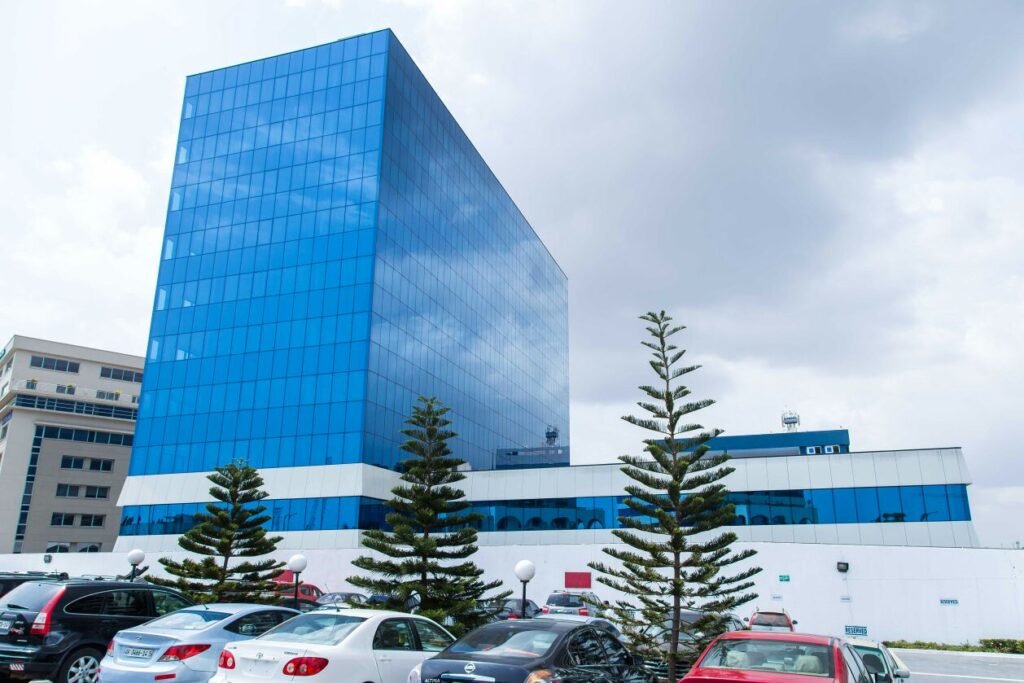
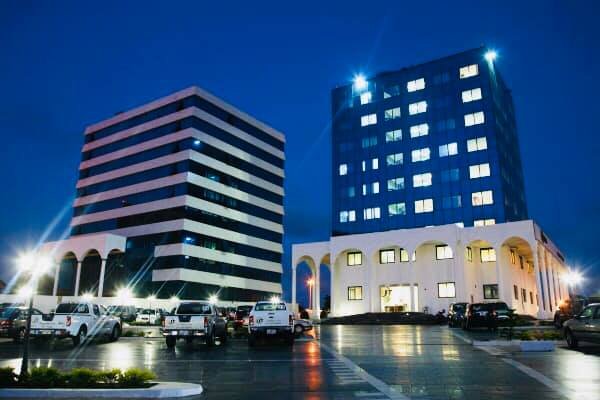
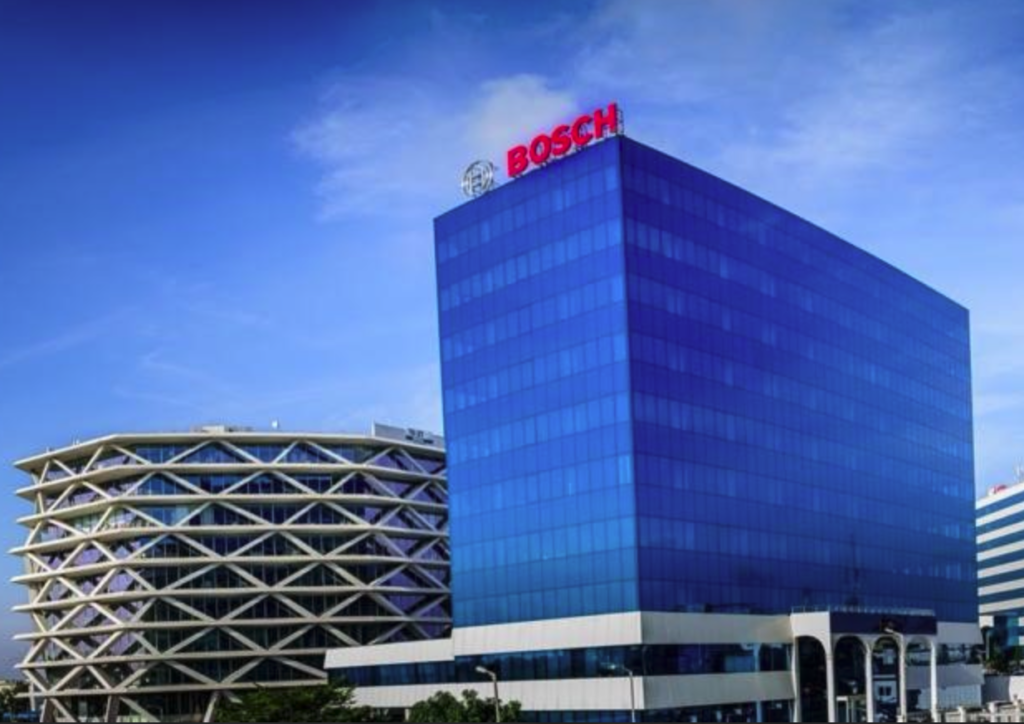
Manet Towers, located in Airport City, is among Accra’s Grade A commercial developments currently offering office space for lease. Tower C, a 10-floor development with floor plates ranging from 700 to 1,100 square meters is actively leasing to businesses looking for a professional, well-managed base in the heart of Accra’s corporate hub.
Getting Started
The right office space in Accra exists but finding it requires a clearer process than most businesses apply. Define your requirements before you start viewing: how many people, what growth trajectory over the lease term, what infrastructure is non-negotiable, what budget, and what lease length you can realistically commit to.
Then visit in person. Ask the specific questions outlined in this guide. Verify, don’t assume. And engage professional advice before you sign.
The due diligence takes time. It’s considerably less time than fixing a decision you got wrong.
If you’re evaluating Grade A office space for rent in Accra’s Airport City, Manet Tower C is currently leasing. Get in touch to discuss your requirements or schedule a viewing.
Explore Tower C