
There’s a particular kind of conversation that happens when a multinational is deciding where to put its Ghana office. The shortlist gets narrowed down, someone pulls up a map of Accra, and almost inevitably, a finger lands on the same district. Not because it’s the cheapest. Not because it was the first name that came up. But because every serious company they’re benchmarking against is already there.
That district is Airport City.
Understanding why requires more than a quick geography lesson. It requires understanding how business addresses actually work and why the concentration of serious companies in one place creates value that no individual building can manufacture on its own.
What Is Airport City?
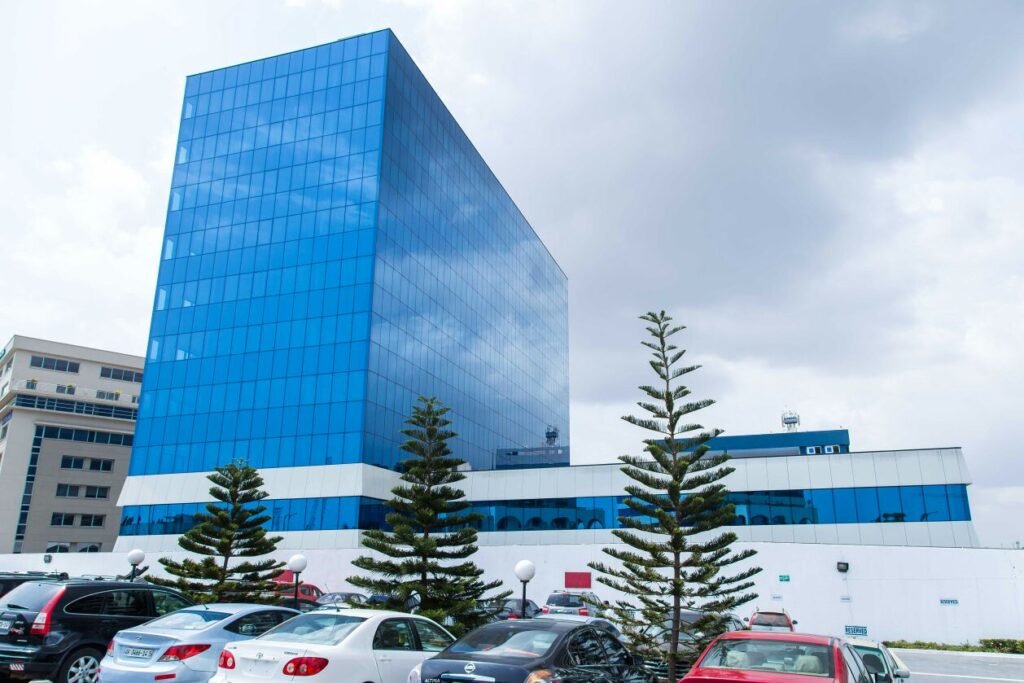
Airport City is a commercial district in the Greater Accra Metropolitan Area, positioned along the corridor flanking Kotoka International Airport. Geographically, it sits at a convergence point: connected to the N1 highway, minutes from the Ring Road interchange, and bordered by some of Accra’s most recognizable business landmarks, Stanbic Heights to the east, Marina Mall to the west, and a cluster of international hotels within a short radius.
Its development into a commercial hub was not accidental. The airport adjacency was the initial draw for aviation and logistics businesses. That seed attracted financial institutions and professional services firms who needed to be close to their multinational clients. Those firms attracted the supporting ecosystem of hotels, restaurants, banking facilities, conference venues that made the district genuinely functional as a place to do business, not just a place to have an address.
By the time Accra’s commercial real estate market matured into what it is today, Airport City had established an advantage that simply compounds over time.
It is, by most measures, where Ghana’s corporate economy operates.
Why Airport City Became Accra’s Corporate Address of Choice
The most durable business districts in any city share a common origin story: one or two anchor tenants make a location credible, which draws more serious operators, which improves the supporting infrastructure, which attracts the next wave of tenants. Each cycle makes the district harder to dislodge as the default choice. Airport City followed exactly this pattern.
The early concentration of multinationals and financial institutions in the district created a network effect. Being located in Airport City meant being close to your peers, your clients, your partners, and critically the talent that wanted to work for all of the above. The clustering made business development easier, professional networking more natural, and the daily logistics of operating an international business in Accra more manageable.
Over time, the physical infrastructure followed the demand. Grade A office developments were built to meet the standards that corporate tenants required. Hotels upgraded to serve the volume of business travelers the district was generating. Restaurants and retail followed the daytime population.
The result is a district that has achieved something genuinely difficult in commercial real estate: self-reinforcing desirability. The companies that most want to be in Airport City are the same ones whose presence makes other serious companies want to be there too. That dynamic doesn’t reverse easily and it’s the primary reason why, when a business decides that Accra is where it needs to be, Airport City is almost always where the conversation starts.
The Strategic Advantages of Being Based in Airport City
For businesses evaluating their options, the case for Airport City isn’t abstract. It comes down to six concrete advantages that affect operations, costs, and competitive position in measurable ways.
Proximity to Kotoka International Airport
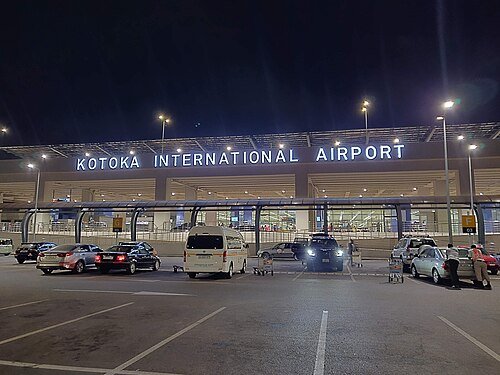
For a business managing regional African operations, the distance between your office and the airport is not a trivial consideration. Executive time is expensive. An hour in traffic after a six-hour flight from Nairobi or Lagos is an hour that could have been a client briefing, a team debrief, or preparation for tomorrow’s board presentation.
Airport City’s proximity to Kotoka International means that for most businesses, the journey from landing to desk is measured in minutes rather than an hour or more. For companies with leadership that travels frequently, or organizations that regularly receive international visitors, this translates into real productivity week after week, over the life of a lease.
Kotoka serves direct routes to major African cities and connects to international hubs across Europe, the Middle East, and beyond. For a regional headquarters managing operations across West or sub-Saharan Africa, the airport connection isn’t a convenience, it’s a core piece of infrastructure.
Ghana’s Highest Concentration of Multinationals
Airport City is home to a significant share of Ghana’s multinational corporate footprint: financial institutions, development organizations, professional services firms, embassies, and regional African headquarters. The specific names change over time, but the character of the district professional, international, corporate remains consistent.
Co-location with this community has tangible business benefits that don’t show up on a lease agreement. Business development conversations happen in lobbies and at shared amenities. Talent who want to work at the level Airport City represents know where to look. Clients visiting from outside Ghana arrive with a preformed expectation of the district’s credibility.
None of this is available as a feature of any individual building. It’s a function of where that building sits.
Grade A Infrastructure as the Standard, Not the Exception
In many of Accra’s commercial districts, infrastructure quality is variable enough that it requires serious due diligence on a building-by-building basis. In Airport City, the baseline is higher. The commercial stock is predominantly Grade A or high-specification Grade B, which means that the operational essentials backup power, fibre connectivity, secured parking, professional building management are typically treated as built-in requirements rather than differentiating features.
That matters because infrastructure failure in a commercial building isn’t just an inconvenience. It is a direct cost: the presentation that can’t happen, the data transfer that doesn’t complete, the client who waits in a lobby because the elevator is down. Complete Guide to Renting Office Space in Accra covers what to evaluate on any building viewing but in Airport City, you’re starting from a stronger baseline than most of Accra’s commercial market offers.
Road Access and Commutability
Accra’s traffic is a well-understood operational variable. It affects where businesses locate and where employees are willing to work. Airport City’s position on the N1 highway corridor and its proximity to the Ring Road interchange gives it reasonable accessibility from most parts of Greater Accra.
Employees commuting from East Legon, Cantonments, Labone, Tesano, or central Accra all have reasonably direct routes. The district avoids the worst of the central city congestion that affects businesses based further into the CBD. For companies making a location decision that will affect the daily commutes of dozens or hundreds of staff, Airport City’s road access is a genuine operational consideration not just a selling point.
A Complete Business Ecosystem Within Reach
The measure of a functional business district isn’t just the quality of its office buildings, it’s whether the surrounding ecosystem supports the way modern businesses actually operate.
Airport City clears that bar. Stanbic Heights is a three-minute walk. Marina Mall is a five-minute drive. Major international hotels relevant for overnight business visitors and for hosting events are within the immediate vicinity. Banking facilities, business-grade restaurants, and conference venues are all accessible without leaving the district.
For a business hosting a full-day engagement with an international client, meetings in the morning, working lunch, afternoon sessions, a dinner to close Airport City makes the logistics straightforward. That’s not a small thing when the alternative is coordinating across multiple traffic-separated parts of the city.
The Address as a Business Signal
There is a dimension of office location that rarely makes it into formal due diligence but influences decisions constantly: what does this address communicate?
An Airport City address communicates that a business is operating at a professional, international standard. For businesses that sell to other corporations, that partner with international organizations, or that recruit senior professionals who have options, this matters.
Not because address prestige is a substitute for substance it isn’t but because it is a fast, credible signal that reduces the effort required to establish that substance in a first impression.
For businesses for whom that signal is irrelevant, other districts may offer better value. For businesses for whom it matters and for much of Airport City’s tenant community, it is part of the total value of the address.
Airport City vs. Other Accra Commercial Districts
Airport City is not the right choice for every business, and a useful guide should say so clearly. Here’s an honest comparison:
| District | Strengths | Best Suited For |
| Airport City | Grade A stock, multinational cluster, airport access, full amenity ecosystem | Corporates, multinationals, financial and professional services, regional HQs |
| Cantonments | Quieter, diplomatic character, residential adjacency | NGOs, embassies, smaller professional practices |
| East Legon | Growing commercial-residential mix, newer developments, strong for tech | SMEs, tech companies, creative and entrepreneurial businesses |
| CBD (Central Accra) | High footfall, legacy corporate address, government proximity | Retail-facing businesses, government-adjacent sectors |
| Labone / Osu | Vibrant, mixed-use, strong character | Creative industries, media, lifestyle-adjacent businesses |
The question isn’t which district is objectively best, it’s which district fits your business profile, your client base, your talent strategy, and your operational requirements. For businesses in the corporate and professional services space, Airport City consistently comes out ahead on the factors that matter most. For others, the trade-offs point elsewhere.
Who Thrives in Airport City?
Based on the character of the district and the businesses it has attracted, Airport City is most naturally suited to:
Multinational companies and regional African headquarters that need a credible, well-connected Accra base and host regular international visitors.
Financial services firms banking, insurance, investment management, fintech at scale for whom professional address, security infrastructure, and proximity to peer institutions all matter.
Professional services practices law firms, accounting firms, management consultants, advisory businesses where client perception of the office environment is a component of the professional relationship.
Aviation, logistics, and trade-related businesses for whom airport proximity is a direct operational advantage.
Development organizations and international NGOs that need a professional address with strong security and reliable infrastructure to support both staff and international visitors.
Companies evaluating Ghana as a West African hub that need to establish a presence that signals long-term commitment and operational seriousness to regional partners and clients.
If your business fits one of these profiles, the question isn’t whether Airport City is worth considering. It’s which building in Airport City best meets your specific requirements.
What Grade A Office Space Is Available in Airport City
Supply of genuine Grade A commercial space in Airport City is more limited than the demand for it which is why occupancy rates in the district’s best buildings have remained consistently strong.
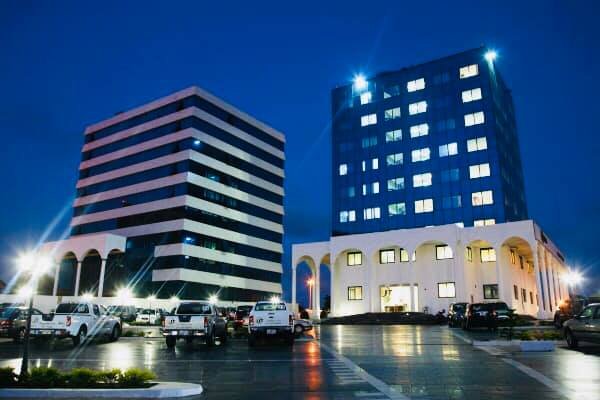
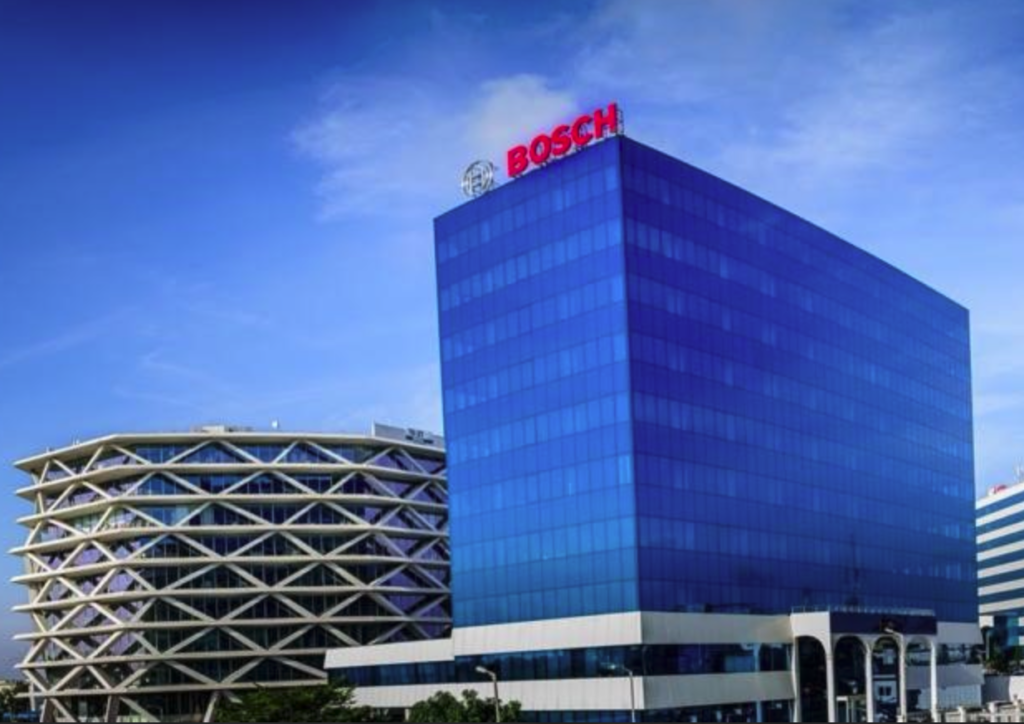
Manet Towers is one of Airport City’s Grade A commercial developments currently leasing office space. Tower C. ten floors, with floor plates ranging from 700 to 1,100 square meters is actively available to businesses looking for a well-managed, infrastructure-ready base in the district. For businesses that want to understand what Grade A means before evaluating a specific building, [link to Blog 1: Complete Guide to Renting Office Space in Accra] covers the full picture.
The Bottom Line on Airport City
Location decisions are easy to get wrong and difficult to reverse. A business that underestimates the operational value of its address, the infrastructure baseline, the commutability, the client perception, the professional network density often discovers the gap only after it has been paying for a lease that doesn’t deliver on those dimensions.
Airport City’s advantage isn’t a single feature. It’s the combination of Grade A building stock, multinational co-location, airport access, road connectivity, and a mature supporting ecosystem concentrated in one district, reinforced by two decades of serious corporate investment. That combination is what makes it Accra’s most consistently in-demand business address.
Getting there before the floor you want is gone is, as it turns out, the easier part.
Manet Tower C offers Grade A office space in the heart of Airport City, Accra. If you’re ready to explore what’s available, schedule a viewing or get in touch with the leasing team.