
Few decisions in a company’s operational life carry as much long-term weight as the choice of office space. The lease amount is visible on the budget. What isn’t always visible until it’s too late to change are the capital implications, the flexibility trade-offs, the FX exposure, and the building quality compromises that compound quietly over a three- to five-year term.
In Ghana’s commercial property market, those variables are specific and consequential. This guide walks through both sides of the leasing versus buying decision clearly, with the local context that most generic guides miss, so your business can make the choice deliberately rather than by default.
A Decision That Affects More Than Just Your Rent
Most businesses default to leasing without properly evaluating the alternative. It’s the familiar route of lower upfront commitment, easier to initiate, and it keeps the decision reversible. For many businesses, leasing is absolutely the right answer. But “familiar” and “right” are not the same thing, and in a market where Grade A office space in Airport City commands genuine long-term value, the cost of defaulting to a lease without evaluating ownership can be significant.
The leasing versus buying decision touches capital allocation, operational flexibility, balance sheet structure, management burden, and long-term cost trajectory simultaneously. Getting it right requires evaluating all of those dimensions together, not just the one that’s most immediately visible.
The Case for Leasing Office Space
The case for leasing is strong, and it applies to most businesses in most circumstances. Here is where it is strongest:
Capital Efficiency
Every cedi and every dollar committed to purchasing property is capital that isn’t available for operations, talent, technology, or growth. For most businesses particularly those in growth phases, those entering new markets, or those for whom the business itself generates better returns than commercial property leasing preserves capital where it generates the most value.
Purchasing office space is a significant capital event. Leasing converts that capital commitment into a predictable monthly operating expense and keeps the balance sheet lighter for the things that actually drive the business forward.
Flexibility and Exit Options
Commercial property ownership is a long-term commitment. If your business grows faster than anticipated, needs to restructure, opens in a new market, or simply decides that a different location serves it better in three years, a lease gives you a defined exit pathway. Ownership gives you an asset to sell which is a different kind of flexibility, and one that takes considerably longer to exercise.
For businesses at inflection points growing quickly, post-acquisition, navigating uncertainty the optionality of a lease is a genuine strategic advantage, not just a financial one.
Reduced Operational Burden
In a professionally managed Grade A building, the major infrastructure responsibilities sit with the landlord: generator maintenance, elevator servicing, structural repairs, security systems, building management. Tenants pay a service charge that covers building-wide costs, but they don’t manage the underlying infrastructure.
Owners do. The full cost and management complexity of keeping a commercial building operationally sound falls to the owning entity. For businesses whose core competency is not property management, that overhead is a real cost in time, in management attention, and in capital for maintenance and repairs.
Access to Grade A Buildings in Prime Locations
For most businesses, purchasing a floor in a Grade A Airport City development outright is simply not a financially viable option not because the buildings aren’t worth it, but because the capital requirement is too significant relative to the returns available from deploying that capital elsewhere.
Leasing is often the only realistic route to occupying Grade A office space in Airport City, Accra [link to Blog 2: Airport City Accra: Ghana’s Top Business Hub for Corporate Offices] which means the decision to lease isn’t a concession on quality. It’s the mechanism that gives serious businesses access to the best buildings in the city’s most important commercial district.
The Case for Buying Office Space
For the right business in the right circumstances, purchasing commercial office space in Ghana is a compelling strategic decision. Here is where the case is clearest:
Long-Term Asset Building
Commercial property in Airport City, Accra, and comparable Grade A corridors in Ghana has demonstrated consistent value appreciation over time. A purchase is not just an operational decision it is an investment in a tangible, appreciating asset. Over a 10- to 15-year horizon, the combined value of occupancy stability and capital appreciation can significantly outperform the cumulative cost of leasing over the same period.
For businesses that have made a long-term location commitment particularly multinationals and regional headquarters establishing a permanent Ghana presence ownership converts an ongoing cost into a wealth-building decision.
Cost Certainty Over Time
A commercial lease comes with annual escalation clauses typically a fixed percentage increase in rent per year over the lease term. Compounded over five years, that escalation has a material effect on occupancy cost. It also compounds in USD for leases denominated in foreign currency, adding an FX dimension to the escalation.
Once a commercial mortgage is paid down, the occupancy cost drops dramatically and stays low. For businesses with a clear long-term view of their location, the cost trajectory of ownership high upfront, falling over time often looks significantly more attractive than the cost trajectory of leasing moderate upfront, rising over time.
Operational Control
Owners can modify, fit out, and configure their space without landlord approval. For businesses with specific operational requirements, specialized security infrastructure, custom IT configurations, bespoke fit-out standards ownership removes a layer of negotiation and approval from every significant change to the workspace.
This matters most for businesses with highly specific space requirements, or those for whom the workspace itself is a product or client-facing environment.
Balance Sheet Strength
Commercial property ownership adds a tangible asset to the balance sheet. For businesses seeking financing for expansion, acquisition, working capital a property asset can meaningfully improve the quality of the balance sheet presented to lenders and investors. It also signals long-term operational commitment in ways that a lease does not.
5 Key Factors That Should Drive Your Decision
No framework works for every business. But these five factors, taken together, point most businesses clearly toward one route or the other:
| Factor | Lean Towards Leasing | Lean Towards Buying |
| Business stage | Early-stage or high-growth | Established, stable, predictable revenue |
| Capital position | Capital better deployed in operations | Strong reserves beyond operational needs |
| Tenure certainty | Uncertain or evolving footprint | Long-term location commitment confirmed |
| Operational flexibility | High; likely to scale, restructure, or relocate | Low; stable, defined space requirements |
| Risk appetite | Prefer to limit fixed asset exposure | Comfortable holding property as a long-term asset |
The honest answer for most businesses reading this is that the leasing column describes them more accurately. The businesses for whom the buying column applies tend to know it and tend to be the ones for whom this section is a confirmation rather than a discovery.
What Ghana’s Market Means for This Decision
The leasing versus buying trade-offs are universal. The Ghana-specific variables are not, and they matter:
Currency exposure on leases. Commercial leases in Ghana are frequently USD-denominated. For businesses earning primarily in Ghana cedis, every lease payment carries foreign exchange risk that compounds over the lease term. The cedi’s historical trajectory means that businesses on multi-year USD leases can find their effective occupancy cost rising significantly in local currency terms even when the dollar rent figure stays flat. For longer-horizon businesses, this FX exposure is sometimes the factor that tips the calculation toward purchase.
Legal due diligence on purchases. Purchasing commercial property in Ghana requires careful, independent legal work title verification, zoning confirmation, review of encumbrances, and confirmation of the seller’s right to transfer. This is more complex than in some other markets, takes time, and has real consequences if shortcuts. Independent legal counsel is not optional.
Financing terms. Commercial mortgage financing exists in Ghana, but interest rates and loan tenors are typically less favorable than in more developed markets. Before committing to a purchase decision based on financing, model the actual cost of capital against realistic Ghanaian commercial mortgage terms, not the terms available in markets with lower base rates.
Market trajectory. Airport City and comparable Grade A corridors have demonstrated sustained occupancy and value performance. For businesses evaluating a purchase in these locations specifically, the investment case is supported by a track record not just an expectation.
Can You Access Both Options in One Development?
In most commercial developments, the decision between leasing and buying is also a decision about which building you end up in. The buildings available for lease are often different from the ones available for purchase.
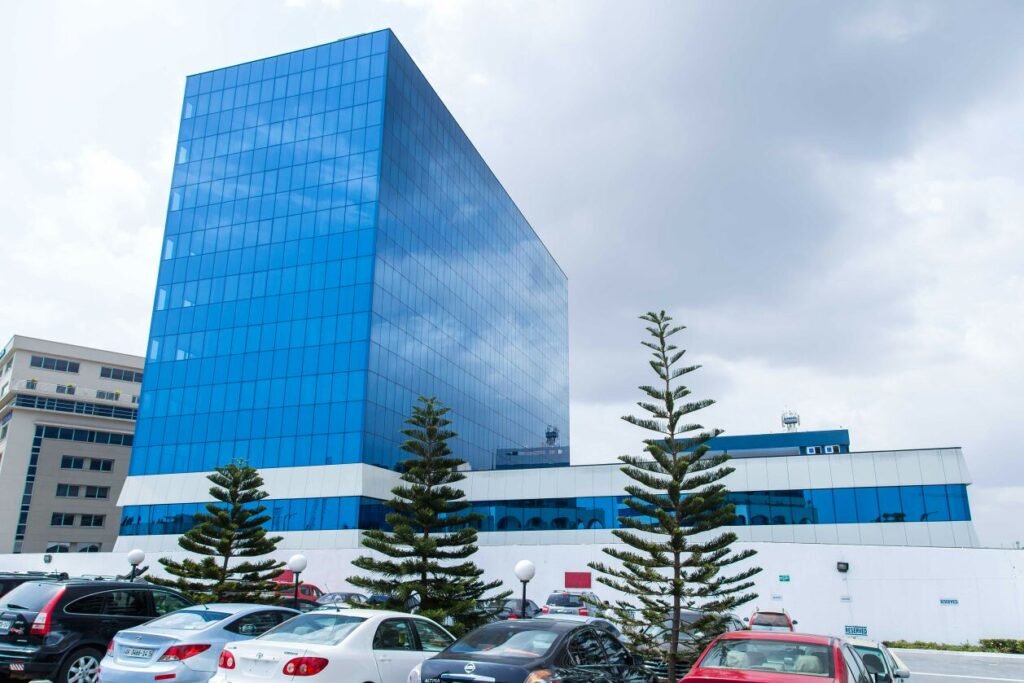
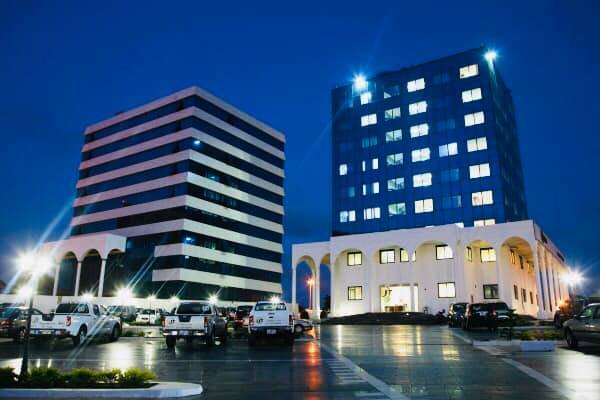
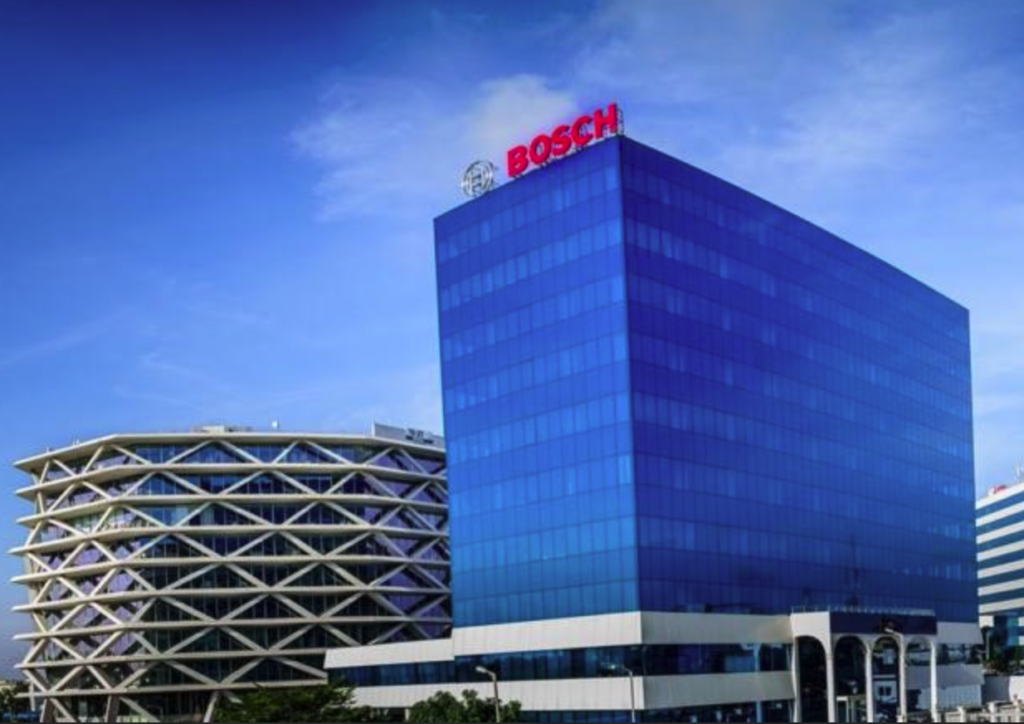
Manet Towers is one of the few Grade A Airport City developments that removes that trade-off. Tower C is actively leasing the right route for businesses that want Grade A infrastructure and a premium Airport City address without the capital commitment of ownership. Tower B is available for occupation via rental or outright purchase the right route for businesses that have made a long-term location commitment and want the financial and operational benefits of ownership.
The building quality, the location, and the infrastructure standard are consistent across both towers. The decision between leasing and buying doesn’t require compromising on any of those dimensions. [link to Blog 5: Manet Towers: 6 Reasons It’s Airport City’s Most In-Demand Office Address]
5 Questions to Ask Before You Commit
Before finalizing either route, work through these honestly:
- How long do we realistically plan to be in this location? If the answer is uncertain, the flexibility of a lease is worth its cost premium.
- What is our current capital position, and where does it generate the best return? If the answer is “in the business,” leasing is almost always right.
- Can we service a commercial mortgage without constraining operations? Model it at realistic Ghanaian rates, not aspirational ones.
- How do the lease escalation clauses over five years compare to our cost of purchase capital? This calculation is often more favorable to ownership than it first appears.
- Have we done full legal and title due diligence? For a purchase, this is not a step that can be compressed or skipped.
Engage a commercial property advisor and independent legal counsel before committing to either route. The cost of that advice is a small fraction of the cost of a decision made without it.
Manet Towers offers both options, Tower C for leasing and Tower B for rental or outright purchase in a Grade A Airport City development. Whether you’re looking to lease or own your office space in Ghana, get in touch to discuss what’s available.
Explore Tower C, available for leasing
Enquire About Tower B, available for rent/sale